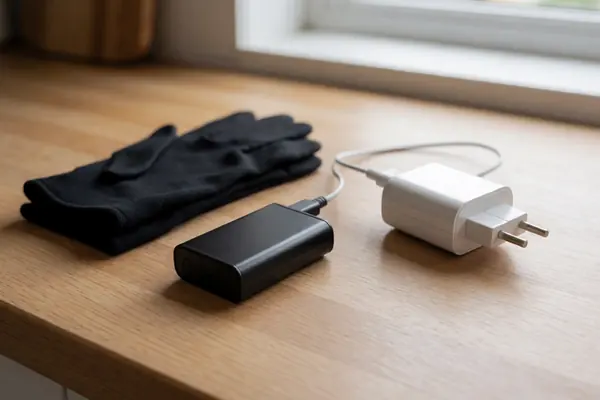
CHARGING
Charge where you can see it
West Yorkshire Fire and Rescue says do not leave batteries charging unattended, for example while asleep or out, and unplug once they are full.
Check your battery supertechwear
WHAT THE GUIDANCE SAYS
Heated clothing is a battery you wear.
Check your battery
CHARGE WISELYthen wrap up warm
Heated jackets, gloves and socks carry small rechargeable lithium-ion packs. UK fire services and the national product regulator say the same few habits keep those batteries safe: the right charger, a watched charge and a quick check for damage.
At a glance
100 Wh
Spare lithium-ion battery, cabin only
The CAA says spare lithium-ion batteries up to 100 Wh are allowed without approval from the airline, carried as carry-on baggage and individually protected against short circuits.
NO APPROVAL NEEDED · UK CAA
160 Wh
Upper limit for a spare battery
Spares above 100 Wh but not exceeding 160 Wh need the airline's approval, and no more than two such spares may be carried per person.
WITH AIRLINE APPROVAL · UK CAA
TWO NUMBERS WORTH KNOWING
Lithium-ion batteries are regulated by their watt-hour rating,
which is often marked on the pack.
If only mAh is marked, the CAA explains: divide by 1000 to get Ah, then multiply by the nominal voltage (Ah x V = Wh). For example, 4400 mAh is 4.4 Ah.
A QUICK BATTERY CHECK
Pick a situation to see what UK safety guidance says about it. The bar shows how firmly the guidance warns.
Based on West Yorkshire Fire and Rescue Service, OPSS and UK Civil Aviation Authority guidance. This is general information, not personal safety advice.
THE SHORT ANSWER
The heating panel is simple.
The guidance is all about the battery.
CHARGING
West Yorkshire Fire and Rescue says do not leave batteries charging unattended, for example while asleep or out, and unplug once they are full.
Check your batteryTRAVEL
The Civil Aviation Authority says spare lithium batteries go in carry-on baggage only, each protected against short circuits.
See the limitsWARMTH
For people with Raynaud's, the NHS advises warm clothes in cold weather, especially on hands and feet, and avoiding sudden changes in temperature.
Habits to try
FOUR HABITS TO TRY
None of these needs new kit. They come straight from UK fire service and product safety advice for anything with a lithium-ion battery.
Charge where you can keep an eye on it, away from anything that burns, and unplug once full. Fire services advise working smoke alarms where you charge.
Use the manufacturer's recommended charger and replacement battery, bought from a reputable source. Do not modify or tamper with a battery.
Check the pack for swelling, cracks or a damaged case before charging. Keep it away from keys and coins in pockets and bags.
Do not put batteries in household waste. Take old packs to a battery collection point at a supermarket or a local recycling centre.
WHY IT MATTERS
West Yorkshire Fire and Rescue says the number of fires caused by lithium-ion batteries has increased in recent years, and that these fires are ferocious, spread quickly and give off highly toxic smoke.
Its advice if one does catch fire is short: get out, stay out, call 999. It also warns against storing or charging batteries at very hot or very cold temperatures.
Questions
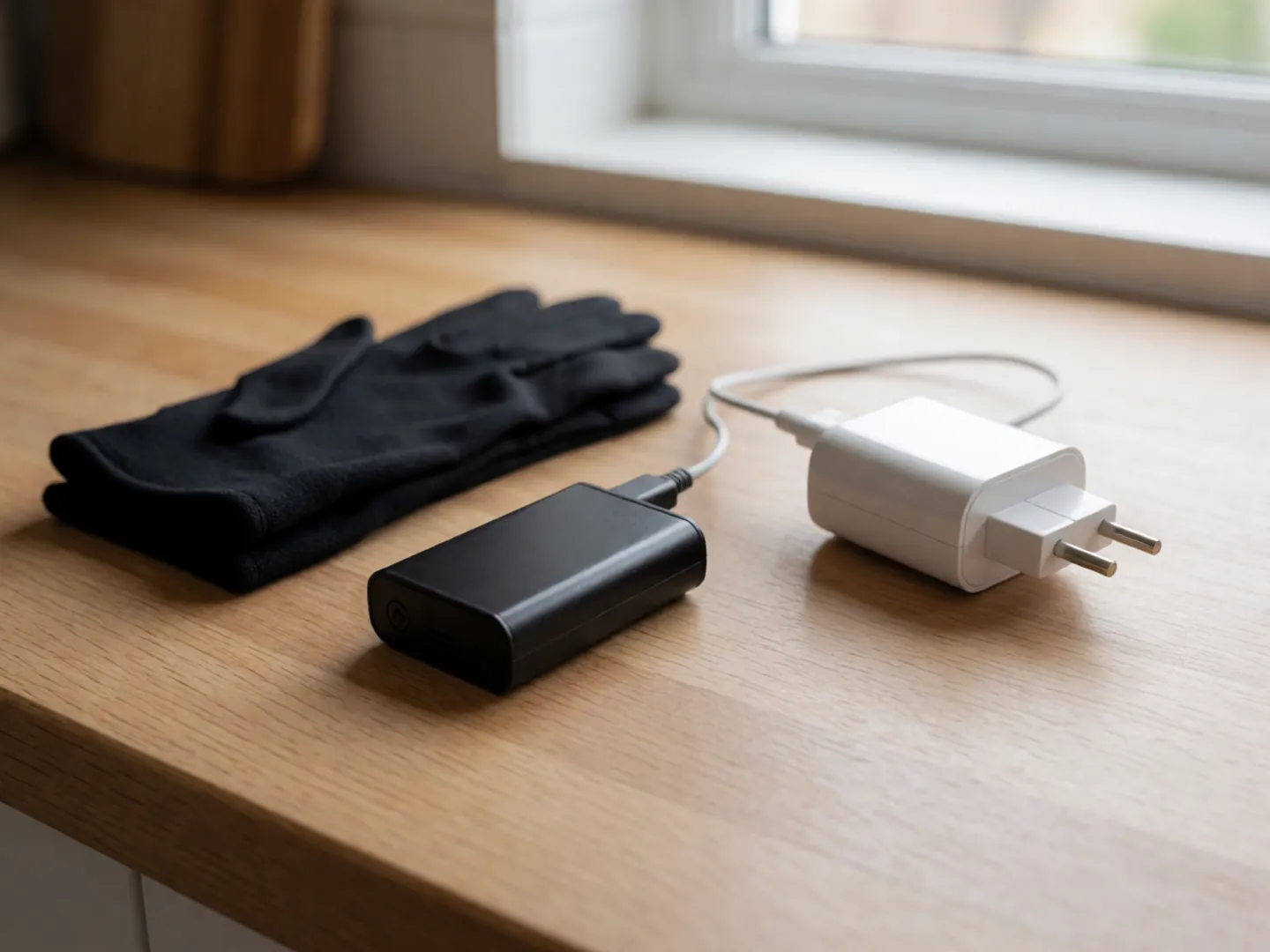
UK fire service guidance says not to leave charging items unattended, for example while you are asleep or away from home, and to unplug chargers once batteries are full.
OPSS says not all batteries and chargers are compatible or safe when used together. It advises using only the manufacturer's recommended battery or charger, bought from a known seller.
The CAA says spare lithium-ion batteries must go in carry-on baggage, protected against short circuits. Up to 100 Wh needs no airline approval; 100 to 160 Wh needs approval. Check with your airline.
Stop using it. Fire service guidance says not to use batteries that appear swollen or deformed, and not to put batteries in household waste: take them to a collection point.
The NHS advises people with Raynaud's to wear warm clothes in cold weather, especially on hands and feet. It does not name heated clothing; ask a GP about your own situation.
Sources
ABOUT THIS NAME
supertechwear.com is part of the DoodleSale portfolio. It isn't in an auction right now, but you can ask about leasing it.